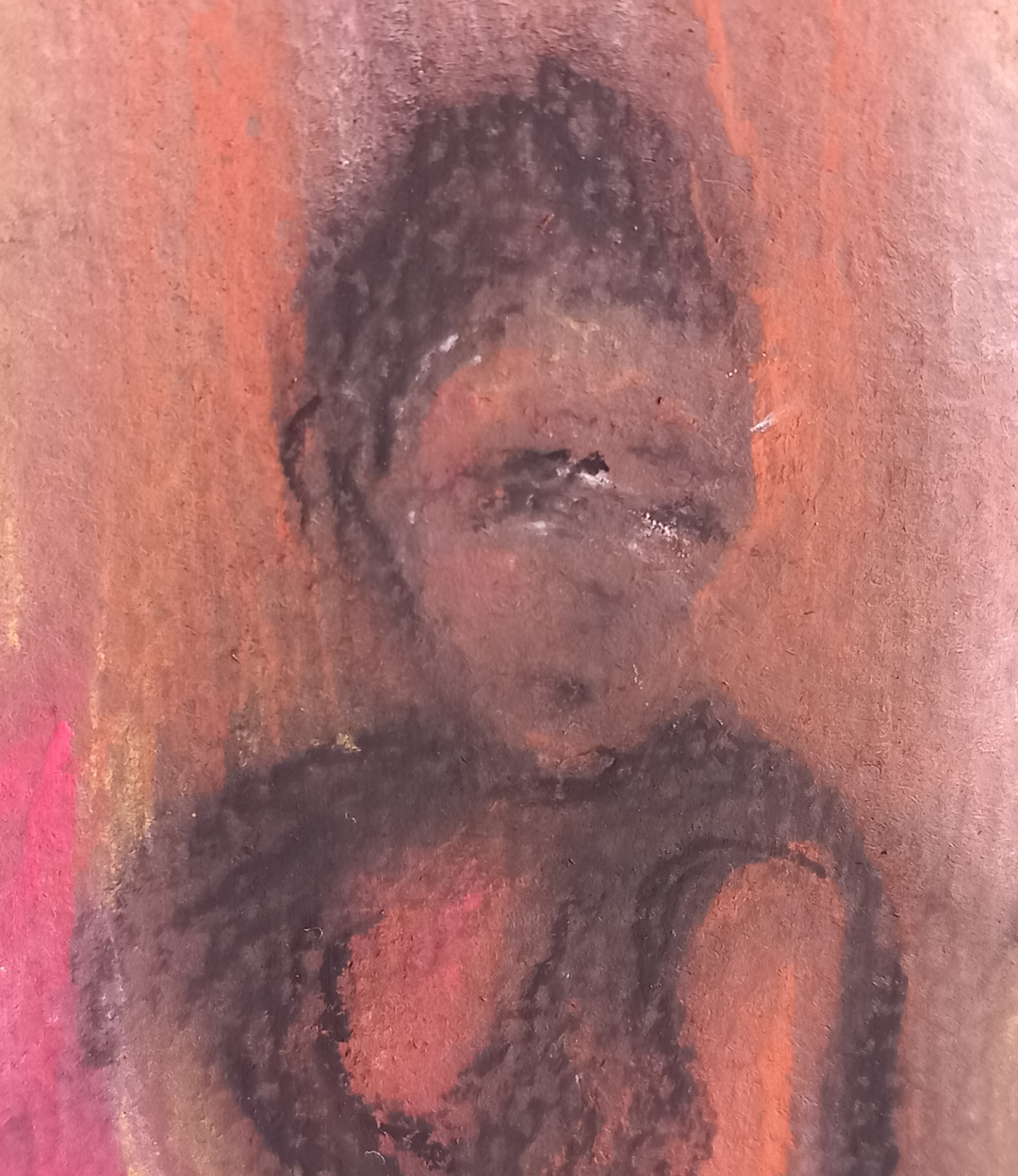
In this part of my effort to create relatable images of Luciferic and Ahrimanic tendencies in the human soul and how they manifest in everyday life, we will examine two more corporate archetypes, this time managerial. The characters below are composites of genuine tendencies and professional stories I have observed in managers over my 18 years in the corporate world. It is important to remember, however, that all these characteristics are deliberately drawn from different individuals and form exaggerated characters to facilitate the distinction and description of the two. In reality, if anyone were this unbalanced, they would probably be unhealthy, physically and mentally.
Luciferic example no. 2: Helen, the Sales Director

Helen is a sales director. She impressed the corporate board during her interview through her entrepreneurial, innovative approach, incredible intuition, and impeccable appearance. She was headhunted after securing a significant business contract for her previous employer, a competitor of her current one, in Japan. She had always declined new job offers until recently, when she decided to leave her former employer. However, no one knows that she left her previous company due to an ethical dilemma: the HR department discovered that she had sued the Japanese client to establish paternity for her newborn. This was not favourable for the company or her professional reputation. At her new company, she can leave the moral controversy over the paternity issue behind, which is still causing upheaval in Japan.
Helen arrives at work late in the morning because she likes to make an entrance in the corporate open space. She wants everyone to be there when she enters. As soon as she reaches the door with her tall, thin heels that can be heard from miles away, she switches on all the lights in the lobby. She greets loudly and cheerfully, drawing all attention to herself. People may love or dislike her behaviour, but they can not ignore her. The only one unimpressed is Steve, who, by default, can not hear or see anything around.
Helen manages the sales team and chose to train them herself. She is charismatic, and her training sessions are full of energy and humour. People are really learning from her; they are relaxed, more confident, and sales have grown tremendously. She takes them on company-paid evening outings and offers praise. She is a true boss-friend, like a big sister.
However, whenever she sees potential in someone for management, she sabotages them behind their backs in HR and corporate meetings by using suggestive images that linger with the audience. This is where Suzie’s talents come in. Every piece of gossip Suzie passes on to Helen becomes a subtle, clever suggestion that can ruin someone’s career or reputation with a single word. She is kind but not so kind as to risk her own position. When someone in her team threatens her role or simply her ego, she creates a public and hysterical kerfuffle that leaves the other person humiliated, leading to their resignation. She eliminates competition swiftly, even before they officially become rivals.
Let’s analyse why everything described above about Helen is Luciferic. We have already examined how many of the Luciferic gifts include beauty, charisma, attractiveness, warmth, wisdom, or genius in intuition. Another Luciferic trait to focus on is innovation and out-of-the-box or revolutionary thinking. Lucifer has always been a revolutionary figure and inspires all revolutions on Earth and in the Cosmos. But what stays at the core of every revolution? It is the refusal to depend on authority. On the Old Moon (stage esoterically considered the previous incarnation of our planet), a number of beings belonging to the third hierarchy (archai, archangels, and angels) had the impulse to develop an inner life of their own and not rely on higher hierarchies. They severed ties and detached themselves from the higher hierarchies to create substance of their own. They took the name Lucifer after the archangel who led this opposition. This was the first act of refusal, the first rebellion against authority in cosmic history. The implications are, firstly, the emergence of cosmic selfishness, and immediately after, the potential for lies. Therefore, what is Luciferic in us is always linked to egotism manifesting through an instinct for independence and rebellion against the past. On the positive side, this inspires individuality and innovation. On the negative side, it brings conflicts and enables lying.
We see Helen as a natural leader with a nonconformist, innovative outlook. However, Helen has a problematic moral conundrum in her past that she cannot erase. Many Luciferically inclined individuals share this mark in their biography: usually, their appearance is impeccable and can give the impression of someone who has lived their life with serenity, sunny days, an open and easy heart, joy, and no conflicts or lingering feelings. The more a person like that appears to be astrally pure, gentle, or easygoing, the more problematic the conundrum of their past can be. Lucifer is right to want to erase the past and live in the present because, after all, all he desired on the Old Moon was to develop an independent inner life. He never anticipated the cosmic implications for the entire spiritual order. Lucifer will always want to leave the past behind, much like a lizard leaves its tail or a snake its old skin. It’s convenient for him to ‘Live in the present/in the now!’. This is why all these catchphrases that encourage us to forget our history and live only in the present are luciferic. The ramifications of Helen’s selfish act—accidentally having a child with the biggest client—are far more profound than a personal matter. She left the company in Japan with substantial debt and a tarnished business reputation, then started anew in Europe. She ‘left her tail behind’ or ‘threw the cat in someone else’s lap.’ These are common images of typical luciferic deeds.
Lucifer treats his troops similarly. For example, if a luciferic being is perceived by human consciousness, Lucifer simply casts it to Ahriman’s domain, distancing himself from it. Take envy, for instance, which is a common luciferic being in our souls. When consciousness notices envy, it causes an uncomfortable feeling. Envy is a very ugly emotion; we dislike ourselves when we are envious. Lucifer doesn’t take responsibility for envy, and as soon as it is noticed, he throws it in the etheric body, where Ahriman resides. In the etheric body, envy becomes ahrimanised: it turns into criticism. Criticism, on the other hand, is much more tolerable. We can deceive ourselves into believing we are merely speaking the truth. However, there is a hanger to it in our emotional life, which we can perceive if we are honest with ourselves. I learned something from a film: whenever we feel that our harsh criticism is justified, we can add ‘That will show them!’ and if it fits perfectly, then our so-called ‘truth’ is, in reality, just poisonous spits of envy. This example illustrates that Lucifer detests being caught off guard and sacrifices his own hordes. That is why Lucifer is never loyal or trustworthy; betrayal is in his very nature.
Lucifer will always seek recognition as a creative deity. In humans, this drives the urge for validation. All these small actions, like switching on artificial light despite there being natural light, or speaking loudly or too slowly, clapping hands, snapping fingers when they are passing by, the sound of high heels, etc., are all gestures that essentially shout ‘Look at me!’.
Lucifer enjoys teaching because he likes being on the stage and savouring his own wisdom, beauty and creativity; however, he doesn’t like his students surpassing him. In normal evolution, students become better than their teachers. The next generation is better than our past generations. When the teacher is Lucifer, however, this gesture is not seen as a compliment. Lucifer will always have classes of students who will never become teachers themselves but will always remain his students. Lucifer gives great gifs in return to our submission to him.
In my biography work, I have often noticed an additional difficulty when working with luciferically inclined people compared to those who come to me with ahrimanic problems or tendencies. The entire work focuses on redirecting the luciferic tendencies into areas of life where they are beneficial, such as art, music, fashion, creation, innovation, marketing, sales, and change management. The goal of this work is to recognise the luciferic beings for the many talents they bring into life, without being deceived or overwhelmed by them, and to take responsibility for the results of one’s own actions without passing unresolved karmic issues onto others.
Egotism cannot be solved; it can only be expanded. Today is about me; tomorrow is about me and my family; the day after tomorrow is about me, my family, and those who share my principles; and eventually, we can become true cosmopolitans and care for the whole world. Recently, I was given an exercise in meditation: to perform an act of selflessness every day. It is important that you have no expectation of reward and that the act is directed toward a living being. You may choose to help someone, even a stranger, feed a stray cat, or simply call a friend to tell them about the good you see in their soul. You can offer encouragement to someone. Renunciation can also be a gift—for example, giving someone a break from your constant corrections and criticism. A key part of this exercise is paying attention to your surroundings in order to recognise needs.
Ahrimanic example no. 2: Jake, the Head of the Technical Division

Jake is the technical director. He has been with the company from the beginning, progressing from a simple programmer to the head of the technical corporate division. He is hardworking and dedicated. He has a sturdy appearance and always seems to be in a hurry. His impatience often makes him seem rude, as he cuts off courtesies and niceties during meetings, always citing the lack of time. He can not control his nervous system, so he displays various nervous gestures, from scratching his face to impatiently tapping his feet on the floor. He often accidentally pulls down or breaks something. Sometimes, he startles people merely by opening doors aggressively or walking quickly through the office.
He comes to the office early, often before the cleaning staff, and by 8.30 he becomes impatient and judgy with whoever isn’t in the office, although the official programme starts at 9.00. He chose an office in the back of the open space so he could see into everyone’s computers. In his view, this discourages people from spending time on the internet or talking about things unrelated to work. His motto is: ‘Efficiency, efficiency, efficiency,’ and he hates when people spend too much time on lunch breaks, cigarettes, or in the bathroom. His department is morbidly quiet; all offices are in line, with no one moving in their office chairs.
His wife called the office once to tell him she had an accident, but he didn’t go to her before the end of the working day. He has a rigid sense of duty that overrides the normality of human life. Calamities, pandemics, famines, and wars-they all faint to unimportant if he has a deadline.
The corporate board loves him because he always negotiates lower salaries for his staff, saving significant budgets. The company can afford more, of course, but his frugality is simply convenient. Even his own salary is less than the market rate for the same position. For some reason, he punishes himself and everyone else. He hates spending money, time, or life energy on anyone or anything, even himself. His game of power is for power alone. His sadomasochistic life tendencies are beyond understanding. He often talks about politics, and he hasn’t understood what life is about just yet.
When looking into Jake’s Ahrimanic traits, we observe that he is already carrying a symptomatic, unhealthy condition in his physical body caused by his Ahrimanic double. The Ahrimanic double is a composite of Ahrimanic spirit-beings linked to our nervous system shortly before birth. The electrical forces that permeate our nervous system are a result of the activity of this composite. The more contact Jake has with the Ahrimanic beings trapped in technology, the more his own Ahrimanic double is enhanced.
When the physical body moves on its own in tics and foot taps, it’s a sign that the etheric body is too weak to fully take hold of the physical. In terms of anthroposophical cause, we can talk about a sustained activity carried out without real interest or love, or rhythmic relief – like programming. This suggests that, in Jake’s case, the choice to become a programmer was preceded by forced learning in childhood, maybe in a rigid or even aggressive environment. He forces himself to be good in an activity he cannot find love for or that brings any joy in itself. He can maybe find some joy in the salary, benefits and appreciation of his work, although the frugality doesn’t show that either, but not in the work itself.
Jake’s most prominent trait is a rigid, loveless sense of duty that is almost militarised. All Ahrimanic beings are good, devoted soldiers, but they lack love or warmth. They are also rude and aggressive. The most appropriate portrait of a horde of Ahrimanic beings is the orcs from Lord of the Rings. Of course, Jake, as a human being, longs for love, but his Ahrimanic double denies it with the false discourse of duty. The Ahrimanic instigations of the soul, the double voice in which Ahriman instils his lies, can be so convincing that no one questions them anymore, especially if they came from a familiar voice in childhood. We see that Jake mistakes duty for love, and he never had the chance to correct his wrong education in this matter.
Ahriman doesn’t know what love is: doesn’t know it, doesn’t have it, doesn’t understand the idea of it. All Ahriman knows, and demands, is the restless work in the matter. He creates a rat’s wheel in which the human being becomes a robotised slave. Jake doesn’t know how to downshift; he cannot give himself a break, and he is intolerant when someone else is resting. He uses control in the office to manage an emotional state he can’t otherwise regulate. Productivity has become a coin for his self-worth. He built an entire structure around himself to protect himself from something, most likely a living memory. His frugality and self-denial are a moral currency, a sort of self-punishment or penance.
In Jake’s case, we see how Ahriman usually operates in the human being: he instils, through fear, a lie early in biography, and this seed of self-doubt grows, and the human being tries to cover it up all their life. The system they build to protect themselves ends up hurting not only them, but also others. In biography work, we startin a way that helps us hear the Ahrimanic discourse in this initial seed and consciously deconstruct it by finding opposing (symmetric) memories, usually of self-worth. Then the work focuses on enabling the I more, so the person can express and receive love.
Let me know your thoughts on this part, and what you’d like to hear from me next time.
I recognise you
I AM
Alexandra Vasilache
(all photos for this article are created with AI)