Category: Biography work

  • The Spiritual and Biographical Experience of the ‘Has Been’

    The Spiritual and Biographical Experience of the ‘Has Been’

    One of the most important spiritual experiences Rudolf Steiner discusses in The Secrets of the Threshold (GA147), in connection with his Mystery Dramas, is the experience of the ‘has been.’ It occurs after the disciple has had many spiritual experiences outside the body, when the Guardian of the Threshold grants permission to cross from the elementary world into the objective spiritual world. Steiner describes how, in crossing the threshold, the disciple no longer experiences themselves as they normally would. They leave all experiences of the physical and elementary worlds behind and can carry beyond the threshold only the memory of the self. At this point, one experiences oneself only as a ‘past self’—a mere memory of oneself. One’s entire life activity rests on memories of the past; the present disappears. In this state, one experiences neither a present nor a future, only the past. Dr Steiner describes this as an experience of ultimate tragedy, in which the human soul begins to understand Lucifer spiritually: to be condemned to perceive the richness of the past and the nothingness of the present moment as a state of being. In crossing the threshold, the self becomes a diminished dot, a ‘has been’ surrounded by the objective spiritual world, which one can no longer ‘see’ as a reality, since one can only contemplate the past. After the unbearable experience of nothingness, in which one is reduced to a dot, one begins to ‘hear.’ One becomes a witness to a dialogue between one’s past self, the ‘has been,’ and the higher spiritual beings in the surrounding spiritual atmosphere. Through this dialogue—an exchange of living-words between one’s past self and the spiritual surroundings—a new self is reborn and empowered through spiritual listening. This is how one becomes oneself in clairvoyant consciousness beyond the threshold: by confronting the nothingness of existence and allowing oneself to be reborn through dialogue between one’s old self and the spiritual atmosphere.

    I have added below the exact passage from Rudolf Steiner describing the spiritual experience of the ‘has been’ in crossing the threshold. Now my task as a biography worker, and the purpose of this article, is to question whether this experience has a correspondence in everyday life and human biography. Reflecting on my personal experiences over the past few years and carefully analysing Rudolf Steiner’s Mystery Dramas, particularly the masterful portrayal of this experience through the character of Johannes Thomasius, the answer is ‘yes, the experience of the ‘has been’ in the spiritual world has a correspondence in everyday life as well’. Whether one is initiated through life itself or outside the body after rigorous spiritual training is not important here, as this experience is the same. The only thing that stands in our way is that, on the physical plane, we are immediately confronted with our materialistic culture, which obscures the experience and makes it unnoticeable or irrelevant.

    Rudolf Steiner teaches that, in the astral world, we experience many processes from the physical world in reverse. But we should clarify from the outset that this particular experience—the experience of the ‘has been’—is the same for the soul on both planes; only the passage of time differs. What may take minutes or hours during meditation outside the body in the astral world is experienced by the soul on Earth over months or years. Thus, in physical life, the experience of the ‘has been’ may take a few months, or up to three years or more, provided it is noticed.

    When does this experience occur in everyday life? Normally, if spiritual development is synchronised with life itself, this experience starts unfolding around the 42nd birthday and continues into the second part of the 42-49 septenal. But, considering the various diversions in our karma over the last centuries, we may acknowledge that, for many people, this process happens when it happens—perhaps later in life—or it simply doesn’t happen. One thing we can all agree on is that, for the majority of people, it either goes completely unnoticed and catalogued under the title ‘over 40’, or placed on a psychological shelf under ‘depression’. Anthroposophy must recognise this as a spiritual process, outside the sphere of abnormal psychology. When life itself is synchronised with dedicated spiritual training, then everything that happens in life should be considered only from the spiritual point of view. We should never mistake an Initiation process for a psychological crisis, even if the two appear similar at first. A biography worker should be acquainted with the effects of spiritual development.

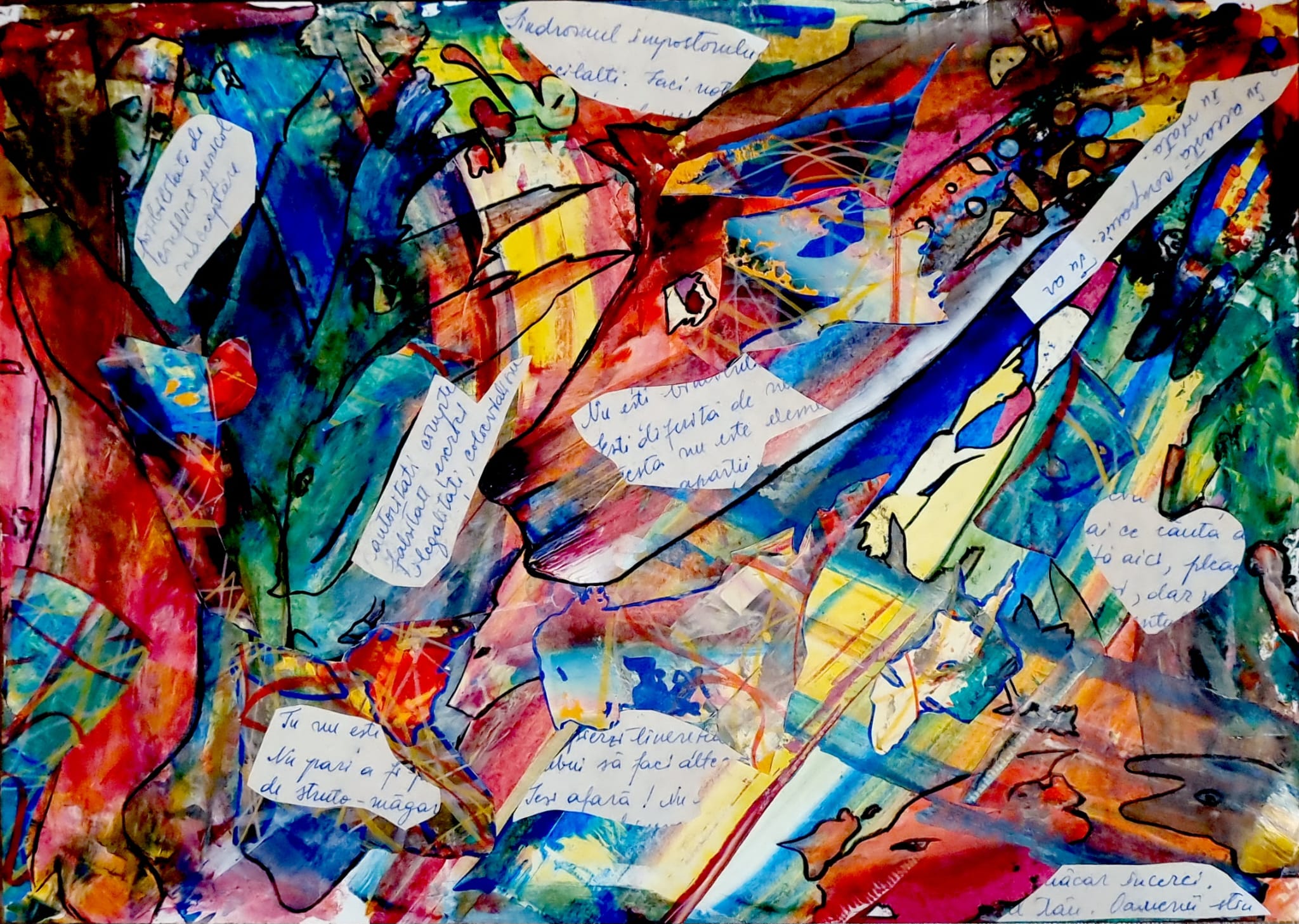
    The experience of the ‘has been’ in everyday life starts in thinking, and it is a continuation of the spiritual development process. One day, perhaps around one’s 42nd birthday, one may notice a loss in one’s creative life: a complete disappearance. One can say to oneself: ‘Yesterday, I could create art, innovate, invent, write, come up with new ideas, be inspired, meditate or think anew. Today, the creative life behind my thinking, talents, skills or abilities is gone.’ Whether we talk about our profession or a hobby we pursued professionally, we notice that no inspiration or newness comes anymore. It is truly a creative crisis. We can still remember how we did things before, even copy others for inspiration; we can rearrange past ideas or past inspirations in a new way that looks new to others, but our creative work at this point is nothing but a rearrangement of the past, a collage made of old scraps. At this point, the self needs to admit: ‘Nothing new comes out of me. I am creatively dried out’.

    When the creative crisis starts, a sort of depression begins in the emotional life. The disciple slowly loses interest in waking up in the morning, or even becomes anxious and desperate. We feel uncomfortable and irritated; we might even blame others for our own creative crisis. We perceive everything as old, and we might even push away people or experiences because we can’t notice the newness in anyone or anything. One of the most unpleasant realisations on the spiritual path at this step is noticing that meditation no longer brings anything new. We feel deserted by the spiritual world, which has stopped communicating. At this stage of the process, we can still have our entire emotional life intact, at times even exacerbated, especially when it comes to anger or depression. In the Mystery Dramas, Johannes Thomasius lost his appetite for painting and fell into a deep depression, tortured by remorse triggered by his old life.

    After months or years, the nothingness conquers the feeling life as well. When we have exhausted anger and depression, we start feeling tired of having feelings. Every feeling becomes an effort that can no longer be supported by our soul. We observe that there are no forces left for our feeling life. A sort of dullness takes place, where one can say: ‘I am too tired to feel anything’. Even if you love someone and want to express it, while your mouth may say: ‘I love you’, the soul experiences only a remembrance: ‘I remember the love I had for you, but I cannot experience this love in the present’. The state of remembering with no present has conquered the feeling life. At this point, one might still express emotional reactions, but they come entirely from memories, not from the present life of the soul.

    When, after a longer period, the crisis extends to the will, the disciple of life feels completely lame: ‘I can’t find the will to do anything anymore; I am completely useless.’ The exterior might even reflect or express this, because this state, unlike the other two, is immediately noticed by others. One might lose interest in life completely, to the extent that they can waste an entire day, if life allows it, or behave mechanically, demotivated and absent in their surroundings. They might give up or lose their job; they might break up with partners or disconnect from family and friends. This is the unbearable situation of the walking dead. Today looks like yesterday, which looks like the day before.

    If, at this point in the process, one stays still, perhaps on a bench in the park, and simply observes, one might notice two streams: the exterior stream of time, which passes regardless, and the nothingness of time above it, deeper in the soul. This is where one feels like a dot while clearly perceiving the periphery continuously moving. One can experience: ‘What stands as me in the physical world is just a memory of myself. However, although I am starting to perceive the spiritual, I cannot find myself there either’. A new, living question arrives in the soul, perhaps the first truly new thing in a long time:

    ‘Where is I?’

    The question is not ‘Who am I?’, but rather ‘Where is my I?’, although the self started to detach from you. One feels that while there must be the individuality who experiences all these, the self cannot be found anywhere. It is a strange experience. Luckily, the everyday earthy life covers it well. We often don’t have time to feel strange because we are too busy.

    It is important to notice that, to have the entire experience described so far, life arranges itself so that one might say, ‘karma loosened up’. Someone who hasn’t had the experience yet might say: ‘I have kids. I can’t allow myself to be depressed or have any of the experience described above. This is only for lunatic Anthroposophists who wander in life mimicking Initiation.’ A person who speaks like that has no understanding of how Initiation affects real life at every step, or of the direct connection between everyday meditation and life events. If all people on the path were to gather in a room one day, they would all agree that the feeling of loneliness is always present, and that even if one is never truly alone physically, karma arranges itself in such a way that they can experience the sorrows of spiritual experiences hidden in plain sight. In my case, before things started, I was someone who could hardly go unnoticed socially. Three years later, I became completely invisible at work and in my personal life, thus hiding in plain sight. The spiritual world will put a veil over people and situations, and close and open different doors in life, so that one can live properly through the sorrows of Initiation. Let’s remember what Dr Steiner said: this is a necessary process. No one will initiate anyone by force, so if anyone chooses physical life over the esoteric, that’s OK, but one can’t expect to find happiness on the path of Initiation. Suffering, pain and sorrow are no one’s first choices, but we cannot evolve without them. I want to add one more point for further discussion: at the beginning of the path, the person doesn’t become better, but much worse. Not only are they not happier, healthier or healed, but they even become more immoral. This is because spiritual practice disturbs the beings of immorality within us and readjusts the relationship between corporealities. On this path, peace is conquered only in time, with effort and striving. Everyone must go through a process of spiritual maturation, which differs from what people experience in everyday life.

    When nothingness extends over the entire soul, life becomes unbearable. One makes a great effort to do the smallest things because one can’t find any motivation to do anything. This is the moment when we need to really push, to really squeeze the will. Even things like waking up in the morning or going out are hard and require a lot of effort. Life, as we knew it, has lost its meaning. Knowing Anthroposophy and knowing that this is a necessary spiritual process that only leads to development can be consoling sometimes, but doesn’t really make things easier. Patience, faith, and training the will in simple things are the only things that work.

    There is a danger in being completely caught by fear. This is where faith in Christ, our destiny, and karma are tested. When nothingness takes over your soul, you can still call for Christ and surrender yourself to Him. But I can assure everyone that this step is not easy, no matter how religious one was before. I heard a religious person in whom I recognised this experience saying: ‘I am ashamed to admit, but now I many times doubt that Christ exists’. One should not be ashamed of this experience because it is genuine. Even the most devoted Christians that the entire Christianity venerates today had it at some point. Before becoming Paul, Saul doubted that Christ was the Christ. His experience of recognition is what led humanity to the Second Coming. It is not always a question of​ Christ’s existence, but of your connection with Him. One feels deserted by Christ. The old relationship with Christ in the old self becomes a memory and nothing else. ‘He once came to me, but He doesn’t anymore’. This experience also calls for finding Christ anew. The ‘contract’ with Christ must be renewed; a new covenant must be made. If you are a devoted Anthroposophist, you might need to find Anthroposophy anew as well.

    ​If we don’t fall at any of these steps, a moment comes when all fears and anxieties disappear, even if the situation has not yet changed. When fear disappears, one gets inspired again. Slowly, new life forces, new ideas come forth. The first changes one experiences are in meditation and dreams. Then, one’s talents come back anew. Life changes completely. When the soul truly wakes up from this set of lethargic experiences, he is surrounded by a completely different reality than the one at the beginning of this experience.

    The entire experience can take years. In these years, one learns to undress themselves of all characteristics and habits that are no longer useful because they no longer create learning. They are not evolutive. The old self becomes nothing but an old snake skin. In these years, one can still give many things from one’s old self, and this can be very useful for many people. However, the experience really provokes and transforms one’s spiritual authenticity.

    ‘It’s a brand new day’.

    I recognise you

    I AM

    Alexandra Vasilache

    ***

    Rudolf Steiner on the experience of the ‘has been’ (29.08.1913, GA147):

    “However, everything that happens in the spiritual world stamps itself upon the physical World. Whether you see a stone, a plant, a cloud, or lightning—behind all these stand spiritual beings and spiritual processes. Furthermore, behind the physical events of your destiny stand spiritual beings and spiritual processes. What are they? Inspirations! They are brought about by a conversation in the spiritual world. The cosmic Word is active as the inspirer of human destiny! This is of great significance for your spiritual perception on meeting your other self. You no longer think then of your human personality within its ordinary limits alone, for you extend yourself—and this must include your other self—to cover your entire destiny. You are only then a truly whole human being when—in just the same way that you say, “This finger is part of myself and belongs on the physical plane to my ego”—you also say, “It is part of myself to bang my thumb or take a painful fall, for all these things are inspired by my other self.”

    However, we must bear in mind just how we meet this other self on crossing the threshold into the realm of spirit. Again and again we must recollect and make clear to ourselves that in all we have learned, observed and experienced in the physical world and even in the elemental world, there is nothing in them similar to the characteristics of the spiritual world where thoughts are living beings. If we were to enter the spirit realm only with what we have discovered in the physical and elemental worlds, then we would be confronting nothingness. What indeed can we bring into this realm? Let us consider the question carefully. The soul must become accustomed not to perceive or think or feel or will in the spirit realm as it does in the physical or in the elemental worlds. All of that must be left behind. However, it must remember what it perceived, thought, felt, willed in the physical world. Just as we carry into later periods of life the memories of earlier times, so must we carry over into the spirit realm out of the physical plane everything that has been strengthened and invigorated in our soul. We must enter the spiritual world with a soul that recollects the physical world. Then we have to endure a certain experience that can be described in the following way: Imagine a moment in your ordinary earth life when all your sense perception suddenly stops; when you can no longer see nor hear, no longer are able, to think or feel or desire anything new. Every kind of life activity stops. You would know only what you remember. In exactly this situation you find yourself, when you rise into the spiritual world with clairvoyant consciousness. There is nothing there at first that will provide new perceptions. Your understanding comes only through remembering; your existence depends on what has remained to you of your memories. Your soul is aware that it can say of itself, “You now are only what you once were; your existence consists of your past; present and future have no meaning for you; your being is made up of what you have been.” One could perhaps say all this easily enough—but to see oneself as nothing but memory, with no perception of the present moment, to speak of one’s being as a mere ‘has been,’ is a remarkable experience.

    When the clairvoyant soul has penetrated so far and endured this experience, then for the first time the human being will begin to have a true understanding for the being whose name has now been mentioned so often, for Lucifer. The human soul, in passing out into the spirit realm, realizes for a moment, “You are only a being of the past.” Lucifer is the one who has become in the cosmic order forevermore such a being of the past, a mere has-been, a remnant of earth epochs that have died away, of what cosmic epochs had brought to his soul. And Lucifer’s life—because the other divine-spiritual beings of normal earth evolution have condemned him to the past—consists in fighting with the aid of his past to gain a present and future. Thus Lucifer stands before the clairvoyant vision, preserving in his life and soul the divine spiritual glories of world creation, yet condemned to realize, “They were once yours.” And now this eternal struggle begins: fighting to add present and future to his past in the cosmic order. To perceive the macrocosmic resemblance of Lucifer to the microcosmic nature of the human soul as it crosses the threshold between the elemental and the spiritual worlds is to perceive the profound tragedy of this figure of Lucifer. And then we begin to divine something of the great cosmic secrets resting deep in the womb of existence, where not only one being struggles with another but even an epoch of time confronts another in battle, as they evolve into beings. A true picture of the world begins to take shape, pouring deep earnestness and dignity into the soul. Here we will sense something that can be called the breath of Eternal Necessities, such as those experienced in the World Midnight—where lightnings flash into existence, illumining even the figure of Lucifer, but they: … die on recognition, and dying shape themselves to scripts of fate, forever actively engraved in souls. The human soul itself, as it grows into life in the spiritual worlds, has a moment where it is a mere “has-been” and confronts nothingness; it is a single point in the universe, experiencing itself only as a point.

    But then this point becomes a spectator and begins to observe something else. Our human soul, become microscopic, has at first no content—just as a single dot has none, but now it finds itself belonging as a third entity to two others. The first to make its appearance is what lives in our memory. This is like an external world which we look back on, saying, “All that is my past.” At first, without really knowing it, we ourselves stand there next to this past existence that we have brought across the threshold into the spiritual world, providing it with a life as thought-being. If then we have a feeling of utter calmness in our soul, whatever we have brought there as our past begins a spirit conversation with the living thought-beings around it. We can observe—like an objective spectator, standing nearby, though at the same time a mere dot—the other two beginning their conversation. Whatever we have brought with us in the way of thought content unfolds a spirit conversation in cosmic language with a spiritual, living thought-being of that realm; there we listen to what our own past discusses with the living spiritual being. At first we are like nothing at all, but then, even as a nothing, we are born through listening to our own past converse with the spiritual beings of the spirit realm. Listening begins to fill us with new inward contents. We learn now to recognize ourselves when we are like a single point and feel ourselves as such, listening to the conversation of our own past with a living spiritual being. And the more we take in of this spirit conversation between our own past and the future, the more we actually become we ourselves become a spirit being. In this process in the spiritual world we find ourselves within a triad. One member of the triad is our own past being, which we have carried up into the spiritual world; we have won it for ourselves in so far as it was able beforehand to reveal its spirituality in the sense world, and then across the threshold to perceive itself as our past life. The second member of the triad is the whole spiritual environment; the third member is our self. This is the threefoldness of the spiritual world: Within the triad, through the antithesis of past life and living spiritual being, the third, the middle part, the mere point-like part, develops itself and becomes—through listening to the spirit conversation of the other two—more and more filled out: a being that is developing itself within the spiritual world. In that world we thus “become” ourselves in clairvoyant consciousness.”

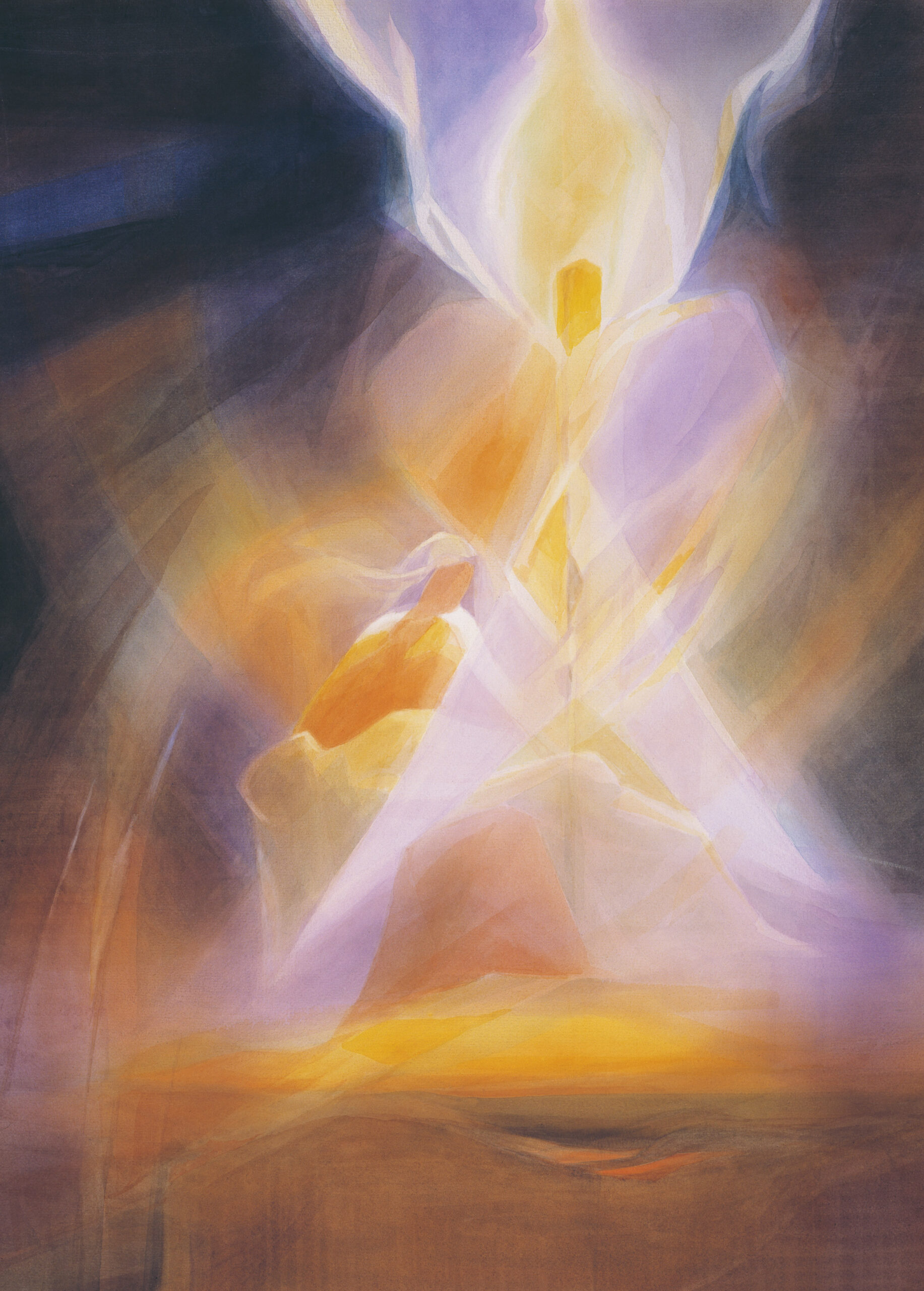
    Art: Liane Collot d’Herbois, Maria Sophia

  • (2) Self-knowledge 101: Lucifer and Ahriman relatable, everyday-life examples

    (2) Self-knowledge 101: Lucifer and Ahriman relatable, everyday-life examples

    Last week, I aimed to create small, relatable images that help anyone interested in esoteric self-knowledge understand how Lucifer and Ahriman influence daily life. These examples are intended to show, in a simplified manner, only one side of a life situation. They are designed this way to make the representation clear and to make the distinction between the two more straightforward. As I have demonstrated many times in my articles, Lucifer and Ahriman work together; wherever Lucifer appears prominently in a situation, Ahriman is right behind him, and vice versa. So, each of these examples also has the complementary aspect manifesting in the background. Since we are only beginning our exploration, we will not focus on the complementary for now, but only on what is prominent. Later in this series, when a bigger picture is constructed, I can introduce the complementary work of Lucifer and Ahriman in the human being and what the composites are. For now, we will look at distinct examples of one or the other.

    I chose today’s examples from the modern work environment that most of us are familiar with. This week, I will provide examples of two employee types, and next week, two manager/supervisor types that we have most likely encountered in our professional lives.

    The workplace is a space where we can not be entirely ourselves. Being professional means each of us must craft a specific persona that takes the lead during working hours or whenever we find ourselves in a professional setting. This construction begins in school and ends at retirement, or whenever the individual chooses to let it go. Sometimes, aspects of this persona are carried into personal life or other environments where they no longer seem appropriate, such as wearing a suit to a painting class. Therefore, the workplace is usually where we present an artificial state of being shaped by rules of courtesy and social conventions. The good news is that building and maintaining this persona fosters awareness because one must be very careful when shaping it, as it is linked to one’s finances and survival. Hence, the ‘I’ must be present at work, not just the physical body. The bad news is that sustaining this construction for long hours each day can be tiring, and often, negative influences, Luciferic and Ahrimanic, emerge uninvited, like wild animals. When they break free, we call it “unprofessional.” When they are contained within our professional persona and align with our chosen self-image, we call it “professional.”

    Since this is not a business class, my goal here is to observe Lucifer and Ahriman beyond roles and professional personas. Please note that I can only present certain aspects; none of these characterisations will ever be complete. We build the puzzle as we go.

    Luciferic case no. 1. The gossipy and sloppy Suzie.

    Suzie is a secretary. She is friendly, humorous, gossipy, and always present at cigarette breaks and company outings. She isn’t particularly good at her job; she’s more or less mediocre. She sometimes misplaces documents and mixes up appointments, but never quite enough to get dismissed. Employees like Suzie survive in the company by telling their boss everything they know about colleagues and, when in trouble, shifting the blame or attention onto others: “But Alexandra also did it…” or “Look, Karen did this, and she wasn’t supposed to…” The most important trait of the Suzie type is that they will always betray others, sometimes without even an obvious reason and with the risk of appearing immature. Susan doesn’t care that she is viewed as immature because this makes her feel younger. Being joyous and forever young is one of Suzie’s life goals.

    Why is the Suzie type preponderantly Luciferic? Luciferic beings are very social, so social that many times they hide behind the collective; for instance, people who like to say “we” instead of “I.” In a lecture dated 21 September 1918 (GA184), Rudolf Steiner gives, as a side note, the following indication with multiple implications:

    “It is better to say ‘Luciferic spirits’ and ‘Ahriman’, for although there are hosts in the following of Ahriman, Ahriman stands out as a unity, because he strives for unity, and the Luciferic element shows itself as plurality, because it strives for plurality.”

    In the Bible, the Luciferic spirits say, ‘We are Legion,’ which means ‘We are Lucifer’. This also suggests that the Luciferic spirits avoid taking individual responsibility for their actions and encourage humans to diffuse responsibility onto the collective or shift it onto others. Consequently, the careless Suzies will only take responsibility at the very end, after they have exhausted all their diversion tactics and none have succeeded.

    In the beginning, the Luciferic beings have betrayed the progressive spiritual world by refusing to reveal themselves in the outer world, thus retaining their being. This instigated in themselves an instinct of independence, which inspired what we recognise in ourselves as egotism. Every single Luciferic act is derived from the original act of cosmic egotism, of refusing the self-revelation, the offering of their being.

    The Suzies of our souls are: friendly – but not devoted or loyal -, superficial, gossipy, sloppy, somewhat spacey – but not when it comes to their own interest, because in that case they become very focused -, untrustworthy and ultimately egotistic. In appearance, Suzies are pleasant, charismatic, and always strive to look young and fresh.

    Michael works against the Suzie tendencies of the soul by reconnecting us with the nobility and chivalry of our being. It stops us from betraying and envying our brothers and sisters. Therefore, whenever we feel Suzie, we can say:

    ‘Spirit triumphant!
    Flame through the impotence of faltering, fainthearted souls!
    Burn up egotism
    Kindle compassion
    So that selflessness, the life stream of humanity
    May flow as the wellspring of spiritual rebirth!’

    Rudolf Steiner

    Ahrimanic case no. 1. The quiet and shy Steve.

    Unlike Suzie, Steve, the programmer, is very diligent, organised, and pedantic, often staying late at work. He has no family because he has always been shy and lacking confidence around women. Typically seen as an average nerd, sometimes even creepy, he whispers when speaking and wears glasses. He finds it hard to laugh in social settings and struggles to understand jokes, so he sometimes smiles or laughs at the wrong times. Despite this, Steve meticulously documents all his work activities, including emails, memos, reports, and evaluation records. He regularly backs up folders and databases and always prepares legal protections for himself against the company, anticipating difficult times ahead.

    Let’s analyse Steve’s Ahrimanic tendencies. Ahrimanic beings are dry, cold, calculated, and robotically intellectual. Long before Claude AI or ChatGPT, there was Steve, our IT colleague. Steve always seemed unemotional when someone spoke, as if he could never perceive the heart behind one’s words. Ahriman cares less about human souls; he cares more about their life forces. Ahriman searches human souls only to find the ones suitable for his purpose: creating a robotised society of living automatons. Ahrimanically inspired professionals are skilled engineers, programmers, accountants, military careerists, spies, and politicians.

    Ahriman is antisocial and anxious. When it comes to love, Lucifer loves himself, enjoying his own voluptuousness; Ahriman only loves matter. We can say that Ahriman’s only ‘love’ is already compacted in matter. Ahriman loves no one; all his work is in matter.

    Ahriman doesn’t understand humour; he only understands and uses mockery and humiliation. When Ahriman laughs, everyone else suffers in excruciating cold pain. This is why it is always better that they don’t know when to laugh.

    Ahrimanic doubles fear of death. When a person gets close to the Guardian that stands at the Gate of Death, the Ahrimanic double leaves in fear. The fear of death is the only good thing that preserves us in earthly existence. Still, it can become a burden when one gets closer to Initiation, as the Ahrimanic double starts working covertly against death, pulling one back from the Threshold. In everyday life, this fear of death might take the appearance of covering oneself up, preparing against a potential lawsuit, calamity, accident, etc. Here, we have acts of excessive documentation, safe rooms, first aid kits, insurance, prenuptial contracts, vaccines – in general, everything that ‘prevents’ something bad that ‘might’ take place. All little fears are rooted in the big fear of death. Even esotericists, who know death is just a stage, fear death, but they fear the death of the spirit more.

    Whenever Ahriman plays with our minds and Steve, the diligent and preventive secret-service programmer, pops in, the healing image is Christ before Pilate. We can remember the principle of life itself standing in a human body before a mediocre authority. We can then represent how Christ gradually diminished His spirit over the three years on Earth, so much that, when He stood before Pilate, He had already extinguished Himself totally in Nathan Jesus. The Spirit extinguished Himself in the Man. We will see then Nathan Jesus, left alone before a not-cold, not-warm political figure, who washed his hands before the sentence—no human or cosmic defence or prevention. The more our power of vision, of imagination, unveils Christ’s sentence, the more the fear in our soul leaves us. Accepting suffering and death is the only way to transformation and rebirth.

    (to be continued with Helen and Jake, their supervisors)

    Let me know in the comments your feedback and questions about these articles, and what you would like to read next in this series.

    I recognise you
    I AM
    Alexandra Vasilache

  • (1) Self-knowledge 101: Lucifer and Ahriman relatable, everyday-life examples

    (1) Self-knowledge 101: Lucifer and Ahriman relatable, everyday-life examples

    When discussing spiritual development, we all agree that improving morality is a prerequisite for esoteric knowledge. However, in practice, we are often tempted to believe we are the exception while criticising immorality in others. Weaponising spiritual knowledge to point the finger is the worst outcome of this temptation. Alternatively, if we genuinely choose to begin improving ourselves morally, we may not always know where to start. As a biography work practitioner specialising in the darker aspects of human nature, I have seen that few people, even long-time Anthroposophists, possess clear notions about Lucifer and Ahriman. They often cannot distinguish between Luciferic and Ahrimanic tendencies within their own souls, how these manifest in daily life, or how to address them. For this reason, I decided to offer some relatable examples in a series of upcoming posts to assist our community and anyone interested in esoteric development in taking even a small step towards self-knowledge.

    For today’s example, let’s consider a situation most of us are familiar with or have experienced ourselves. Suppose a dear friend comes to us one day and shares something about themselves that we haven’t heard before — something they’ve been going through for a long time and they haven’t told anyone else. The only reason they’re sharing it now is that they are desperate. The specific details of the situation are not crucial; we can imagine scenarios such as an abusive spouse, a mortgage overdue, a forced evacuation, addiction, a calamity, a chronic painful disease, confrontation with poverty and death, or similar hardships. For our exercise, we need to portray a good friend revealing a long-standing suffering we had no idea they endured, and seeking our humanity by sharing their story.

    I will give you an example of a common (predominantly) Luciferic reaction and a common (predominantly) Ahrimanic reaction that might occur in us when we hear the news. They are not extreme reactions; they are normal human responses that each of us has likely experienced. We have all done this in the course of our lives, either the first, the second, or both. However, on an esoteric path, one must confront these small immoralities within ourselves with awareness, as they might prevent passing the Guardian of the Threshold.

    An example of a common Luciferic reaction to someone sharing a difficult situation is “Oh, you poor thing…” followed by an array of possible solutions to fix the issue: “Have you tried this, that and the other?”, or even worse, “You know what you should do?”. In psychology, this is called premature problem-solving, and it is recognised as a form of emotional invalidation.

    Let’s analyse the reaction and understand why this is Luciferic. We start by asking: “If my friend, a person who stirs within me feelings of love and joy, who was there with me for better or worse, whom I know and trust, spends days and nights, months, and years in a situation, and they can’t find a solution for themselves, what is it in me that makes me believe I possess infinite wisdom and spiritual power to immediately eradicate my friend’s suffering by finding a solution so brilliant, yet so quick, that it enlightens my mind faster than thunder?” Once we put it this way, we immediately realise: It is Lucifer.

    Lucifer, as an archetype, doesn’t comprehend suffering. He created his own paradise, where he abolished suffering and pain. For Lucifer, Christ’s deeds of becoming human, suffering, and dying crucified among criminals are completely puzzling. A Luciferic being will mock suffering, ignore it, or attempt to “fix” it. They will always seek comfort and happiness. Lucifer is simply cold and unempathetic when it comes to other people’s suffering. Therefore, just like that, in less than three seconds, a Luciferic being within us, the microcosmic representative of Lucifer, denies our friends’ suffering, along with the experience, potential wisdom, and spiritual gifts that come from it. It is simply “uncomfortable.”

    Another thing that Lucifer excels at is teaching and preaching. For a long time, Lucifer has been humanity’s most luminous teacher. Lucifer possesses many extraordinary gifts, and one of them is his remarkable wisdom. Luciferic beings share, of course, their source’s wisdom, but they are also irritating when they offer it to others. A Luciferic being will immediately try to teach everyone, forcing them into a discipleship they didn’t sign up for. Luciferically inclined people are inspired, creative, and physically attractive, and they will always look for a stage, sometimes even when the theatre is closed. They immediately position themselves above everyone else, offer ideas and unsolicited advice, and take offence if others don’t follow it. “No one listens to me; if only people would listen to me. “… This is just the surface of an apparently innocent Luciferic reaction.

    If you notice any of these reactions in yourself when someone is sharing their suffering, the first thing to start with in correcting it is to reconnect to your humanity, to your human vulnerability. Asking, “How can I help?” instead of giving insensitive advice is the first step. Second, listen and stay with the uncomfortable feelings your friend’s story stirred up in you. Later, when you are alone, you can recall a difficult moment in your life. How did the people around you react to your suffering? What did you need from them then, above everything? What was useful from what was offered to you?

    Most of the time in these situations, people don’t need outsourced smart solutions. They need encouragement to find the courage to walk through the experience. They need support and compassion. “You are not alone in this, my friend. I am with you every step of the way. I got you.” In situations like this, we can become representatives of Christ instead of becoming representatives of Lucifer or Ahriman.

    To the other pole, a common Ahrimanic reaction in our example is to slightly panic and fear at the hearing of the uncomfortable situation, followed by a quick mental calculation and evaluation of self-discomfort, with the result of telling our friend, even before they finish their story, a little lie: “You could have stayed with us for a few days, but unfortunately we are out of town/the children are sick/my in-laws are visiting.” This reaction occurs when the Ahrimanic beings of one’s Double mobilise in calculating and “pricing” what the friend’s situation or the mere narration of the situation means financially or just emotionally for us. We may not have been good at maths or economics in school, but the Ahrimanic beings in us are great economists and risk evaluators. In less than a second, the Ahrimanic Double has already calculated how much offering help would “cost” us in money and comfort and decided it’s not worth it; or they might assess that the whole situation is just a huge discomfort.

    Ahriman, as an archetype, is the head of the World Bank. Of course, I mean this metaphorically, but here is the truth in it: Ahriman (Satan) is the one who tempted Christ in the desert to turn the stones (matter) into bread (life). We know from Rudolf Steiner’s comments on the Gospels that the entire scene refers to the use of money through which Ahriman infiltrated himself as an intermediary of life. As a high spiritual being newly descended to Earth, Christ didn’t know anything about it, and His surprise at what Ahriman was showing Him created a small debt for humanity to Ahriman. Only humans can reverse the process and unbind the life Ahriman has bound into materialism (stones) through money.

    Returning to our example, stinginess as an Ahrimanic trait of the soul can’t be solved in one day, but there are solutions. I can offer you what I practice myself whenever I feel a certain “uneasiness” about offering money: When you are asked for donations and don’t feel like giving any, even if you clearly see the need, instead of creating excuses for yourself in your mind, just force yourself to give a small amount anyway. I know it’s hard, but just give something symbolic whenever you decide you won’t participate. Rule above yourself, and force your egotism a bit further. And when you want to offer a small donation to someone, and you are happy with the amount you decided to offer, force yourself to offer a bit more than you were initially comfortable offering.

    This practice has miraculous forces. Initially, you feel you’ll cry for the money you gave away, but once they are out there, you won’t even notice them. What happens instead is that you liberate yourself, piece by piece, from the Ahrimanic prison of karmic debt, and it’s worth every penny. One day, you might even observe how all the money you offered just finds a mysterious way back to you: it will come back like lost animals when you don’t expect them. At the Christmas Conference, after defending the 12 schillings, Rudolf Steiner offered the image: one hand raised high to the ideal, and the other deep in the pocket.

    Ahriman is the father of lies, although he doesn’t always lie. For an Ahrimanic being, what is important is to realise its purpose by all means. If telling the truth does it, Ahriman will tell the truth. He will, of course, mock a lot, but he will say it if nothing stands in his way. If twisting the truth helps, he will tell half-truths. But he can also create an infinity of beings of lie. We are surrounded by beings of lie; it’s the substance from which Maya is created. Every little insincerity we tell ourselves, or others, puts a heavy stone against our spiritual development.

    As you can see, only in this last example are there three distinct types of Ahrimanic beings: beings of fear, of avarice and of lie.

    The way to deal with Ahriman morally is having a good reason, the right thinking. First, it is essential not to make judgements and suppositions before the facts. In our example, the whole situation was triggered by a wrong supposition: “what if they ask for money/a place to stay, etc.”, or “what if the norms of friendship require me to step up as a friend, thus losing my comfort”. This wrong thought immediately triggered fear (fear of losing comfort, time, or resources, fear of the situation, an unconscious fear for one’s own survival, etc.), which led to an Ahrimanic mobilisation. We learn that a simple mistake in our thinking opens the door for an Ahrimanic army.

    None of these reactions that hit close to home makes anyone a bad person. Not even a medieval Catholic Church would punish anyone for so little. But on the esoteric path, it is important to make such observations.

    Let me know in the comments if this example was helpful and what you would like to read next.

    I recognise you

    I AM

    Alexandra Vasilache

  • The Penitent. Working with the Guardian of the Threshold – a biography work exercise

    The Penitent. Working with the Guardian of the Threshold – a biography work exercise

    The biographical exercise proposed below serves as preparation for the initial encounter with the Guardian of the Threshold as the Being of Reproach. It is spiritually inspired by this meeting, and if approached correctly, with complete honesty towards self-knowledge, it can also plant the seed of karmic transformation of difficult relationships and situations that occur in life. It represents the beginning of a future Manichean work.

    The exercise does not require prior knowledge of Anthroposophy, as such knowledge is already contained in its content. However, without prior self-knowledge exercises, some admissions and recognitions regarding one’s morality can be challenging for beginners. As this exercise is designed to reveal moral imperfections and work with them towards self-knowledge and self-improvement, complete vulnerability, honesty, admission, and recognition are the required soul dispositions. Treating this exercise with superficiality may trigger adversity in one’s soul, so please read the entire content of the exercise carefully before beginning and decide if it is for you. Ensure you fully understand the task and its purpose before starting. It is crucial to undertake this exercise in a setting that allows complete privacy and tranquillity.

    You will work with the reproaches, accusations, or condemnations that were addressed to you in life which marked your biography deeply, integrate them in your soul together with the accusers and reverse each of these experiences into its positive to the point where one can say: ‘Now I understand the lesson that lies beneath all these accusatory experiences and I acknowledge my accusers as my karmic agents and my teachers. I am a human being, I made mistakes, and I can see now that I played in other people’s lives the same role my accusers played in mine. I am grateful and I forgive.’ Gratefulness and forgiveness are the higher purposes of the exercise, along with the ability to recapitulate the soul process whenever such experiences occur again.

    You will need a few sheets of A4 paper, coloured crayons, a pencil, a diary or journal, and the instructions below.

    Subscribe to continue reading

    Become a paid subscriber to get access to the rest of this post and other exclusive content.

  • Rudolf Steiner’s retrospection exercise and practical ideas for biography work

    Rudolf Steiner’s retrospection exercise and practical ideas for biography work

    The (evening) retrospection is an essential exercise given by Rudolf Steiner to configure the soul and develop the astral vision. This exercise contains the essence of self-development; therefore, I consider it an essential practice in biography work. With this post, I would like to essentialise what I believe to be the purpose, Rudolf Steiner’s wish about this exercise, and his indications about practising it, as resumed by the first esoteric school participants. In the end, the reader will find some practical considerations from my personal and group experience in biography work.

    Important indications from Rudolf Steiner regarding retrospection

    1.     The purpose of the practice

    “Then comes the formation of the astral body. Just as we worked on the mental body through thought control, so too we must work on our astral body by ordering our memory. It must also be controlled, must become an object for testing. That exerts an enormous, significant influence on one’s entire life. You must discontinue the habit of having egotistical thoughts of regret when you look back on your actions. What you remember must simply be there for you to learn how to do things better. We must learn from the past and use our memory to make our souls more capable. When we so regulate our memories that we do not look back in an arbitrary way but rather look back even at what happened appears to be the least significant things so that they become a school for learning, then we strengthen the backbone of our soul.

    When we strengthen our memory in this way, then astral vision is formed. This transforms our astral body into an organ of the will that we can then use. We must disaccustom ourselves to tears, we must overcome sympathy and antipathy so that we can bring the proper attitude to images in our memories.

    When we have become lord over our memory, over our ability to think and form mental pictures, then we have reached our preliminary goal. We recognize that those who do not practice this must constantly feel that they are dependent upon every spiritual “draft” around them, like a swaying reed that is thrown this way and that by every passing thought. There is no other means of getting into the astral and mental world than to create and form oneself from within. Those who organize their memories, who in the evening form the cloud-like shape into regular radiant forms, namely the higher parts, which proceed from the head and heart, those people will show that they live from within into the outer world. When human beings have come this far, then nothing bad can reach them anymore. In their presence, we could send thoughts of the worst sort and those thoughts would come right back, as if they had not even touch them. In their meditative work they have built a spiritual covering that surrounds them.”

    Extract from Esoteric Lessons vol. I – GA266/1, 15.02.1904)

    2.  A description of the exercise

    Now, we also want to talk about evening retrospection. Every evening before going to sleep we would go back to our day from the end to the beginning. The day should pass our by in pictures. One thing is important in doing this, namely, that we never allow a feeling of regret to arise. Regret is always egoistical. Those who regret wish themselves to have been better; they have an entirely egotistical wish. We should learn from our daily life. When we have done something bad, we should not regret, but rather think: at that time I was not able to act otherwise; now, however, I can do it better and want to do it better in the future. With each experience of the day we should ask ourselves: Did I do it rightly, could I have not done it better? One will always find that one could have done it better. In doing this one thing is very important that we learn to look upon ourselves as a stranger, if we have observed and criticized ourselves from the outside. Altogether we should get the mental picture of the day as clearly as possible. It is much more important to remember small details than important incidents. A general who has fought a great battle immediately has a picture of the battle before his or her eyes that evening. That sticks in his mind with itself. However, all the little details of the day, for example, how he put his boots on and that took them off, he no longer knows. This is what is important, that we have a picture of the day as complete as possible. For example, we see ourselves walking down the street and we try to remember how the rows of the houses went, which window displays we walked pass, which people met us, how they looked, how we ourselves looked; then we see ourselves going into a shop and remember which sales associates came to meet us, what they wore, how they spoke and moved. We must strive very hard to remember such small details; this strengthens the forces of the soul.

    One must not think that one needs an hour for this. At first, one will remember little, and then gradually, with great effort, more and more. Finally however one can with practice reach the point where the the entire life of the day can pass through the soul like paintings on a wall, clearly and with all details, in five minutes. However one must strive patiently. For those who quickly repeat the events of the day only superficially, registering them without color, this exercise is of no use at all.

    What should be intended through this exercise is as follows: If we have walked a long path and at the end of the path would once again like to know the way we have come, we can do this in two ways. First of all we could stand with our backs to the path just travelled and attempt to remember what lies behind us. We can, however, also turn around and survey the path. Now when we have traversed a period of time, to begin with we can only think back with our memory and not look back at the interval of time that has passed. But this looking back, which we know only in space, is also possible in time, and we can learn to do it by trying to let the day that has just ended pass through our consciousness clearly and as graphically and concretely as possible. No event of the past is entirely gone; it is still present in what we call the akashic chronicle. Only in this way does one learn to read it. At first one only recognizes within it what concerns oneself, gradually what concerns others. For this reason, the evening retrospection is such an important, indispensable exercise.

    Esoteric pupils can observe something strange about themselves: they can notice that their memories constantly become worse and worse. This is entirely natural. But it will soon get better or, more accurately, memory will disappear and something new will take its place. The new facility will be the ability to see the pass directly. Then one no longer needs an ordinary memory.

    Aside from meditation and retrospection, pupils must do certain auxiliary exercises. They are intended not to develop new capacities but rather to strengthen the character of their soul and to shape it into the proper form. Only when this auxiliary exercises are done can the success of meditation be beneficial.

    Extract from Mathilda Scholl and Anna Weissmann’ s notes included in Esoteric Lessons vol. 1, GA 266/1, 29.01.1907

    3.     Other important considerations

    Retrospection: In retrospection we place ourselves into what was experienced in such a way that we properly feel the difference between our experience in the soul and the real experience in the external world; that is as if we were to observe the picture of a landscape with our eyes closed, i.e. a memory, compared to a real observation with eyes opened, that is a direct beholding. That is the same relationship as the one between memory and retrospection. (Memory is remembering and retrospection should be beholding, in this case).

    Memory gradually disappears with initiates and the direct beholding of what one wants to remember take its place. One must imagine a picture before oneself of the day’s events, exactly and clearly with all the details-shirt, face, manner, etc. everything exactly-and thus see the events in the picture, how someone spoke, what was done, etc. It is very important to call up into one’s memory the small events that are not very interesting, that cost efforts to remember, because in this way one’s inner forces are stimulated. The power of imagination is created by exercising the capacity for forming mental pictures. The completeness of the experience is not important but rather the clarity of the images. With all this work no muscles are to be strained.

    As the light first had to form the external eyes and the body received the stimulation for creating other organs, now it is obligated to pass this on further to the astral body. This happens through all the activity of the physical body. Everything in the physical body is formed from outside, also the stomach and other inner organs. Thus, the organs of the astral body are formed through imagining pictures.

    Extract from Alice Kinkel’s notes included in Esoteric Lessons vol. 1, GA266/1, 20.01.1907

    Practical aspects regarding the retrospection exercise in the process of self-knowledge

    Is the body position essential for this exercise?

    Although there is the possibility to enter sleep with this exercise while already lying in bed, however, for a better flow of the etheric stream of the head, I observed it is better if we do the exercise in the classic anthroposophic meditative position: comfortably sitting on the chair or armchair, with the spine upright (if you have back problems, you can use pillows), feet on the ground. Each position stimulates memory differently, and new aspects can occur.

    Eyes closed or open?

    I observed that, in the beginning, closed eyes could offer a discontinuity from the physical seeing, which is essential for the inner sight that can progress with time. Here is the disadvantage of escaping in fantasy; therefore, we need a better focus. If one can ignore the physical seeing ever since the beginning, the exercise can be done with the eyes open.

    Can I take notes during this exercise?

    The exercise has results if it is done fluidly, without interrupting the flow of images by taking notes. The historical strictness of a chronicle is not essential here. The retrospection before sleep should be a miniaturised copy of the retrospection after death. The retrospection of a biographical event, correctly done, can go back to the karmic seed that generated it. The observations on the moral aspects should be done in writing after the uninterrupted unfolding of the images.

    What interval should I consider?

    For the evening retrospection, I recommend considering the day from 6 p.m. yesterday; this includes the dreams, if existent. For the retrospection of a biographical event, it is essential to consider the changing atmosphere before and after a physical event. Here dictates the reasoning of one’s heart and their free will; there are no recipes.

    The succession of the images

    Retrospection naturally implies that the succession of the images is backward, and reversed chronologically. However, my personal and group practice has shown that it is easier for many people if they do it first chronologically and then reverse it. The images can succeed:

    a. One after another, front and back, as in daily life.

    b. Side by side, panoramically, from left to right, and switched.

    The natural tendency of each person differs; therefore, it is an excellent exercise to practice it sometimes opposite to one’s own natural way. The panoramic succession, for example, is more impartial and allows the observation of critical spiritual aspects.

    Observations that develop the imaginative ability through memory (valid in every meditative process)

    1. Caloric aspects, sensations of warmth or coolness.
    2. Chromatic aspects, changes of light. Some images can appear in warm light colours, others in colours from the dark spectrum (grey, bluish). Behind the picture, what sensation of colour do I have?
    3. You can also observe the sounds (from memory or a new musicality), sensations of smell, and qualities of the soul substances.
    4. Changes of vitality in the images’ atmosphere. How is the air in the picture? Is it vivid, fresh, chilly, like a morning breeze in the mountains, or is it thick, dense, stiff?

    Moral observations

    We must remember the purpose of our practice again and again, and this is to become better humans. Moral questions towards ourselves are

    Alexandra Vasilache