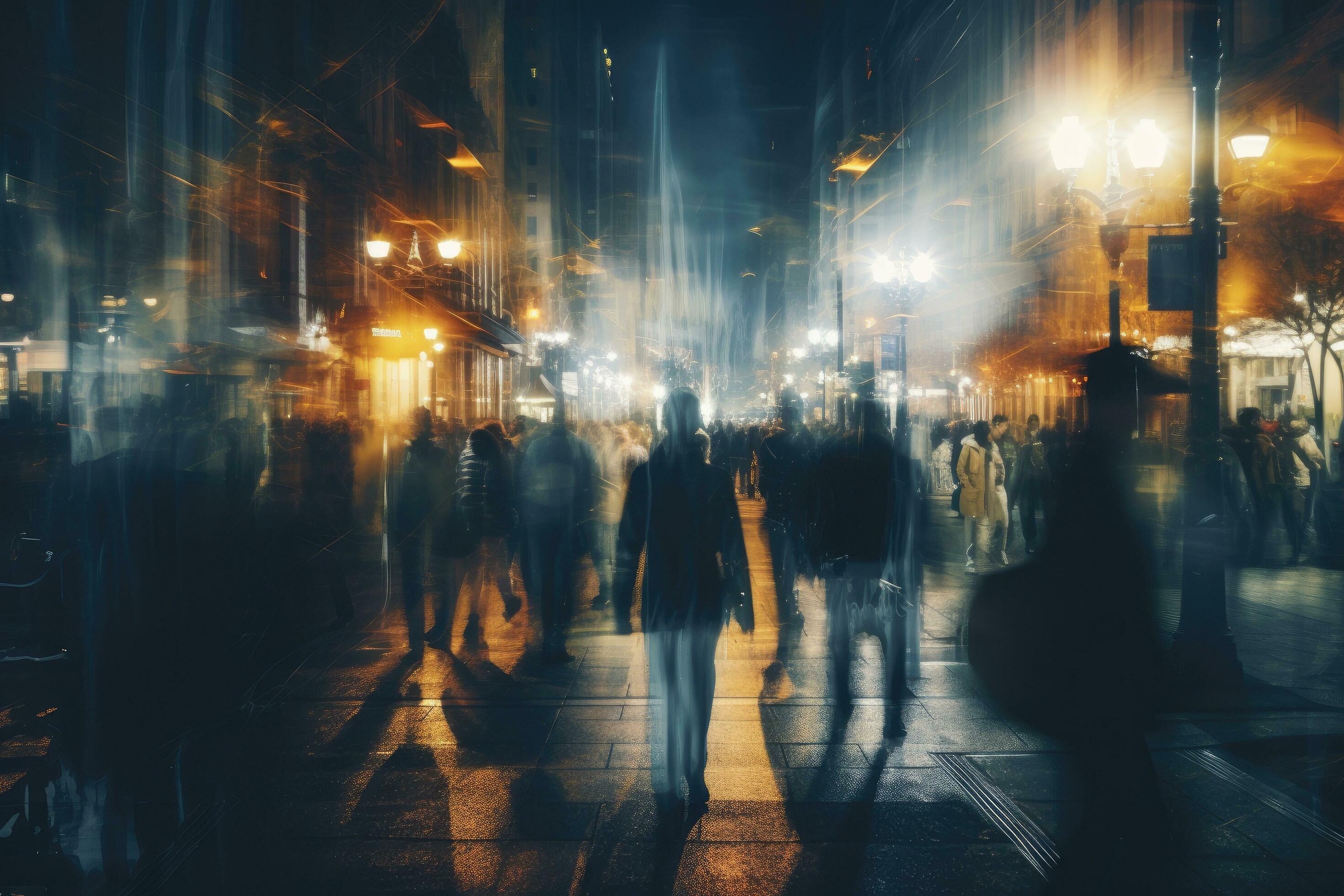
The (evening) retrospection is an essential exercise given by Rudolf Steiner to configure the soul and develop the astral vision. This exercise contains the essence of self-development; therefore, I consider it an essential practice in biography work. With this post, I would like to essentialise what I believe to be the purpose, Rudolf Steiner’s wish about this exercise, and his indications about practising it, as resumed by the first esoteric school participants. In the end, the reader will find some practical considerations from my personal and group experience in biography work.
Important indications from Rudolf Steiner regarding retrospection
1. The purpose of the practice
“Then comes the formation of the astral body. Just as we worked on the mental body through thought control, so too we must work on our astral body by ordering our memory. It must also be controlled, must become an object for testing. That exerts an enormous, significant influence on one’s entire life. You must discontinue the habit of having egotistical thoughts of regret when you look back on your actions. What you remember must simply be there for you to learn how to do things better. We must learn from the past and use our memory to make our souls more capable. When we so regulate our memories that we do not look back in an arbitrary way but rather look back even at what happened appears to be the least significant things so that they become a school for learning, then we strengthen the backbone of our soul.
When we strengthen our memory in this way, then astral vision is formed. This transforms our astral body into an organ of the will that we can then use. We must disaccustom ourselves to tears, we must overcome sympathy and antipathy so that we can bring the proper attitude to images in our memories.
When we have become lord over our memory, over our ability to think and form mental pictures, then we have reached our preliminary goal. We recognize that those who do not practice this must constantly feel that they are dependent upon every spiritual “draft” around them, like a swaying reed that is thrown this way and that by every passing thought. There is no other means of getting into the astral and mental world than to create and form oneself from within. Those who organize their memories, who in the evening form the cloud-like shape into regular radiant forms, namely the higher parts, which proceed from the head and heart, those people will show that they live from within into the outer world. When human beings have come this far, then nothing bad can reach them anymore. In their presence, we could send thoughts of the worst sort and those thoughts would come right back, as if they had not even touch them. In their meditative work they have built a spiritual covering that surrounds them.”
Extract from Esoteric Lessons vol. I – GA266/1, 15.02.1904)
2. A description of the exercise
Now, we also want to talk about evening retrospection. Every evening before going to sleep we would go back to our day from the end to the beginning. The day should pass our by in pictures. One thing is important in doing this, namely, that we never allow a feeling of regret to arise. Regret is always egoistical. Those who regret wish themselves to have been better; they have an entirely egotistical wish. We should learn from our daily life. When we have done something bad, we should not regret, but rather think: at that time I was not able to act otherwise; now, however, I can do it better and want to do it better in the future. With each experience of the day we should ask ourselves: Did I do it rightly, could I have not done it better? One will always find that one could have done it better. In doing this one thing is very important that we learn to look upon ourselves as a stranger, if we have observed and criticized ourselves from the outside. Altogether we should get the mental picture of the day as clearly as possible. It is much more important to remember small details than important incidents. A general who has fought a great battle immediately has a picture of the battle before his or her eyes that evening. That sticks in his mind with itself. However, all the little details of the day, for example, how he put his boots on and that took them off, he no longer knows. This is what is important, that we have a picture of the day as complete as possible. For example, we see ourselves walking down the street and we try to remember how the rows of the houses went, which window displays we walked pass, which people met us, how they looked, how we ourselves looked; then we see ourselves going into a shop and remember which sales associates came to meet us, what they wore, how they spoke and moved. We must strive very hard to remember such small details; this strengthens the forces of the soul.
One must not think that one needs an hour for this. At first, one will remember little, and then gradually, with great effort, more and more. Finally however one can with practice reach the point where the the entire life of the day can pass through the soul like paintings on a wall, clearly and with all details, in five minutes. However one must strive patiently. For those who quickly repeat the events of the day only superficially, registering them without color, this exercise is of no use at all.
What should be intended through this exercise is as follows: If we have walked a long path and at the end of the path would once again like to know the way we have come, we can do this in two ways. First of all we could stand with our backs to the path just travelled and attempt to remember what lies behind us. We can, however, also turn around and survey the path. Now when we have traversed a period of time, to begin with we can only think back with our memory and not look back at the interval of time that has passed. But this looking back, which we know only in space, is also possible in time, and we can learn to do it by trying to let the day that has just ended pass through our consciousness clearly and as graphically and concretely as possible. No event of the past is entirely gone; it is still present in what we call the akashic chronicle. Only in this way does one learn to read it. At first one only recognizes within it what concerns oneself, gradually what concerns others. For this reason, the evening retrospection is such an important, indispensable exercise.
Esoteric pupils can observe something strange about themselves: they can notice that their memories constantly become worse and worse. This is entirely natural. But it will soon get better or, more accurately, memory will disappear and something new will take its place. The new facility will be the ability to see the pass directly. Then one no longer needs an ordinary memory.
Aside from meditation and retrospection, pupils must do certain auxiliary exercises. They are intended not to develop new capacities but rather to strengthen the character of their soul and to shape it into the proper form. Only when this auxiliary exercises are done can the success of meditation be beneficial.
Extract from Mathilda Scholl and Anna Weissmann’ s notes included in Esoteric Lessons vol. 1, GA 266/1, 29.01.1907
3. Other important considerations
Retrospection: In retrospection we place ourselves into what was experienced in such a way that we properly feel the difference between our experience in the soul and the real experience in the external world; that is as if we were to observe the picture of a landscape with our eyes closed, i.e. a memory, compared to a real observation with eyes opened, that is a direct beholding. That is the same relationship as the one between memory and retrospection. (Memory is remembering and retrospection should be beholding, in this case).
Memory gradually disappears with initiates and the direct beholding of what one wants to remember take its place. One must imagine a picture before oneself of the day’s events, exactly and clearly with all the details-shirt, face, manner, etc. everything exactly-and thus see the events in the picture, how someone spoke, what was done, etc. It is very important to call up into one’s memory the small events that are not very interesting, that cost efforts to remember, because in this way one’s inner forces are stimulated. The power of imagination is created by exercising the capacity for forming mental pictures. The completeness of the experience is not important but rather the clarity of the images. With all this work no muscles are to be strained.
As the light first had to form the external eyes and the body received the stimulation for creating other organs, now it is obligated to pass this on further to the astral body. This happens through all the activity of the physical body. Everything in the physical body is formed from outside, also the stomach and other inner organs. Thus, the organs of the astral body are formed through imagining pictures.
Extract from Alice Kinkel’s notes included in Esoteric Lessons vol. 1, GA266/1, 20.01.1907
Practical aspects regarding the retrospection exercise in the process of self-knowledge
Is the body position essential for this exercise?
Although there is the possibility to enter sleep with this exercise while already lying in bed, however, for a better flow of the etheric stream of the head, I observed it is better if we do the exercise in the classic anthroposophic meditative position: comfortably sitting on the chair or armchair, with the spine upright (if you have back problems, you can use pillows), feet on the ground. Each position stimulates memory differently, and new aspects can occur.
Eyes closed or open?
I observed that, in the beginning, closed eyes could offer a discontinuity from the physical seeing, which is essential for the inner sight that can progress with time. Here is the disadvantage of escaping in fantasy; therefore, we need a better focus. If one can ignore the physical seeing ever since the beginning, the exercise can be done with the eyes open.
Can I take notes during this exercise?
The exercise has results if it is done fluidly, without interrupting the flow of images by taking notes. The historical strictness of a chronicle is not essential here. The retrospection before sleep should be a miniaturised copy of the retrospection after death. The retrospection of a biographical event, correctly done, can go back to the karmic seed that generated it. The observations on the moral aspects should be done in writing after the uninterrupted unfolding of the images.
What interval should I consider?
For the evening retrospection, I recommend considering the day from 6 p.m. yesterday; this includes the dreams, if existent. For the retrospection of a biographical event, it is essential to consider the changing atmosphere before and after a physical event. Here dictates the reasoning of one’s heart and their free will; there are no recipes.
The succession of the images
Retrospection naturally implies that the succession of the images is backward, and reversed chronologically. However, my personal and group practice has shown that it is easier for many people if they do it first chronologically and then reverse it. The images can succeed:
a. One after another, front and back, as in daily life.
b. Side by side, panoramically, from left to right, and switched.
The natural tendency of each person differs; therefore, it is an excellent exercise to practice it sometimes opposite to one’s own natural way. The panoramic succession, for example, is more impartial and allows the observation of critical spiritual aspects.
Observations that develop the imaginative ability through memory (valid in every meditative process)
- Caloric aspects, sensations of warmth or coolness.
- Chromatic aspects, changes of light. Some images can appear in warm light colours, others in colours from the dark spectrum (grey, bluish). Behind the picture, what sensation of colour do I have?
- You can also observe the sounds (from memory or a new musicality), sensations of smell, and qualities of the soul substances.
- Changes of vitality in the images’ atmosphere. How is the air in the picture? Is it vivid, fresh, chilly, like a morning breeze in the mountains, or is it thick, dense, stiff?
Moral observations
We must remember the purpose of our practice again and again, and this is to become better humans. Moral questions towards ourselves are
Leave a Reply